
Looking to automate support, cut costs, or improve user experience?
You’ve likely come across two popular solutions: chatbots and AI assistants. While they may sound similar, they offer very different capabilities.
Chatbots are rule-based. AI assistants are intelligent, adaptive, and built for the future.
The tool you choose will directly affect:
- Customer experience
- Team efficiency
- Operational costs
- Scalability of support
This guide breaks it all down: features, benefits, limitations, use cases, and what to consider before implementation.
Let’s find out which solution aligns best with your business goals.
Understanding the Fundamentals: Chatbots vs. AI Assistants
AI and Chatbots for business have evolved into essential tools. Each serves different roles depending on your goals, complexity of interactions, and long-term vision.
What Are Chatbots?
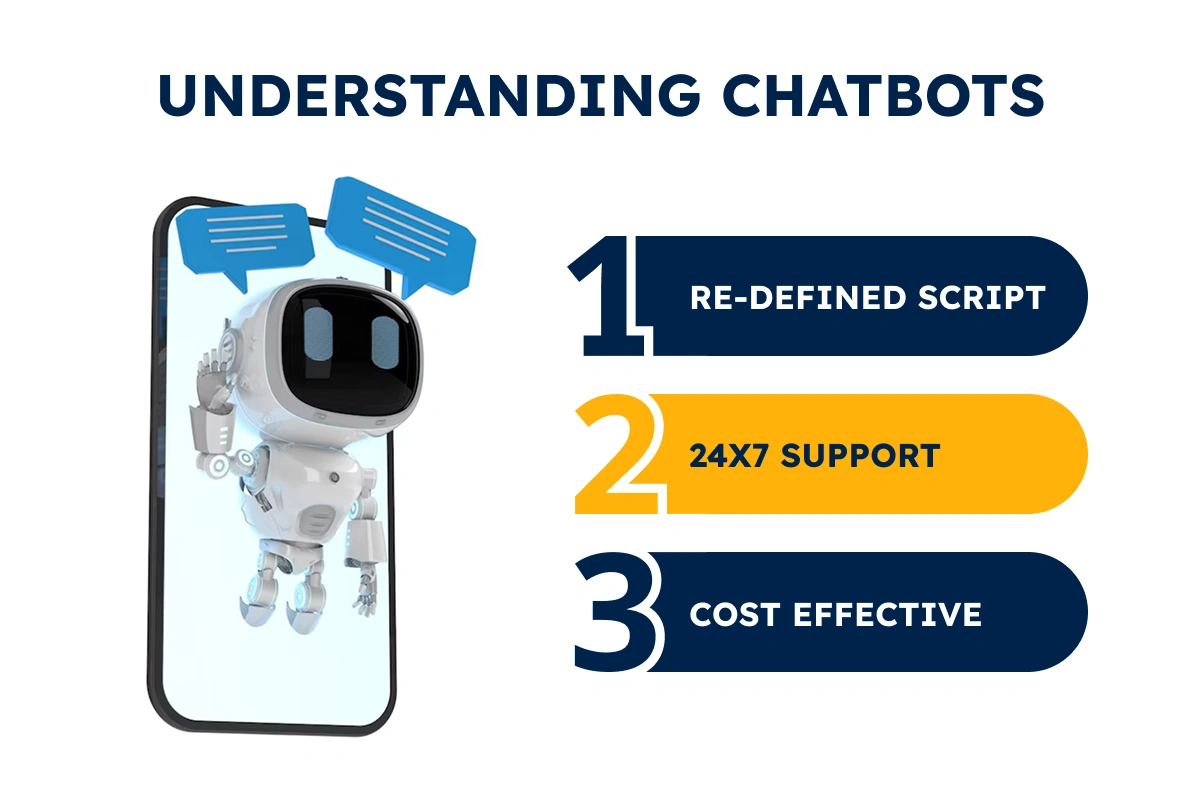
Chatbots are rule-based systems designed to handle repetitive, predictable tasks such as answering:
- FAQs
- Order tracking
- Account lookups
- Simple troubleshooting
Why businesses use basic chatbots:
- Cost-effective to deploy
- Simple to manage with minimal training
- Reliable for repetitive queries
- Quick to launch and scale
If you want to deploy your own chatbot, our Chatbot Development Services offer plug-and-play solutions and custom integrations.
Our AI consultation services help you decide when to choose a chatbot and when to invest in AI.
What Are AI Assistants?
AI assistants or virtual assistants are like the upgraded version of chatbots. They’re smarter and better at holding human-like conversations.
Unlike chatbots, they use natural language processing (NLP) and machine learning (ML) to understand context, intent, and even emotion.
They can:
- Understand open-ended or vague questions
- Remember earlier conversation context
- Recognize tone and sentiment
- Offer suggestions or next steps based on user behavior and past data
Why businesses are turning to AI assistants:
- Handle complex, multi-step queries
- Deliver more personalized customer experiences
- Reduce reliance on human agents for advanced support
- Scale smarter as customer expectations grow
Also read: AI-Powered Future: Revolutionizing Businesses With Tools Like ChatGPT
Key Differences Between Chatbots and AI Assistants
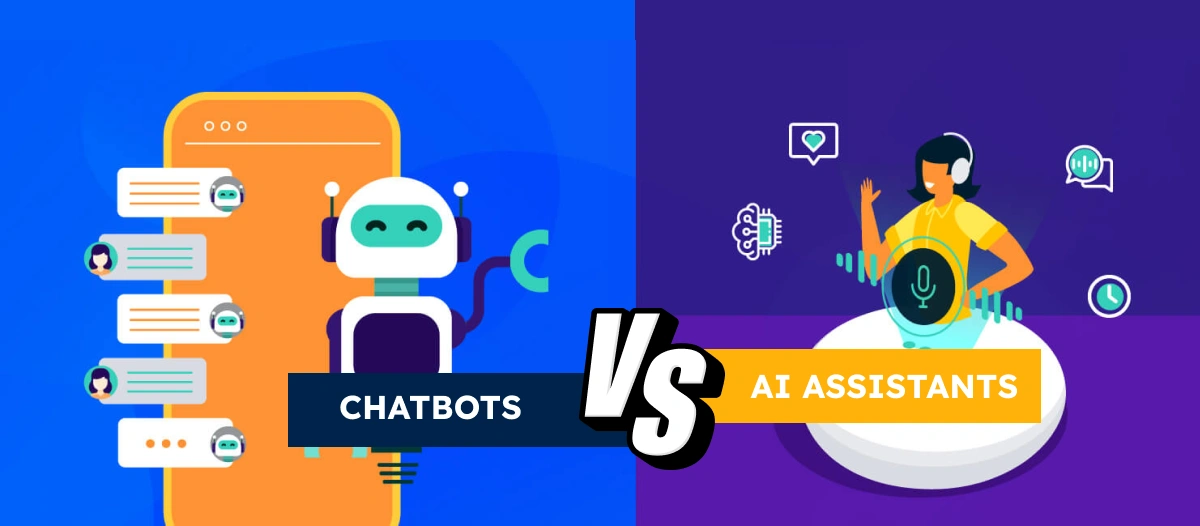
Chatbots and virtual assistants differ significantly in their functions, capabilities, and long-term value. Understanding these differences will help you make the right choice.
1. Intelligence Level
Chatbots: Operate using predefined rules and decision trees, responding only to specific triggers or keywords.
AI Assistants: Use AI, ML, and NLP to interpret complex or ambiguous messages and continuously improve responses based on historical data.
2. Conversational Capability
Chatbots: Scripted, rule-based conversations effective only for predictable Q&A.
AI Assistants: Context-aware, remember conversation history, adapt to tone, and provide natural interactions.
Choosing wrong can cost more. Make the right call with our experts.
3. Task Complexity
Chatbots:
They are designed for simple, repetitive tasks like answering FAQs, guiding users to specific pages, or collecting form data. They’re great for quick support but lack depth.
AI Assistants:
Can manage complex, multi-step workflows, including booking services, navigating systems, offering product recommendations, and even processing transactions.
If your use case requires multitasking, contextual responses, or logic-based decision-making, an AI service company can build solutions tailored to these demands.
4. Personalization
Chatbots:
Provide generic, one-size-fits-all responses with limited ability to tailor conversations based on the user’s identity or history.
AI Assistants:
Offer hyper-personalized experiences by analyzing user data, browsing behavior, past interactions, and preferences. They can suggest relevant products, preemptively answer follow-up questions, and even predict needs.
Personalized conversations lead to stronger customer retention, improved satisfaction, and more conversions.
Also read: Grok AI: Here’s All About Elon Musk’s Chatbot
5. Development Complexity
Chatbots:
They are quick to develop and cost-effective, making them ideal for businesses that need a fast digital assistant with low upfront investment. No AI training is needed.
AI Assistants:
Requires greater time, resources, and expertise to build and maintain. They need AI/ML training data, NLP tuning, cloud infrastructure, and ongoing monitoring to deliver consistent performance.
While AI assistants take more effort to implement, they offer far greater returns in terms of capability, automation, and long-term scalability.
The debate, chatbots vs AI assistants, reveals significant differences in capability. Choose one that fits your business requirements and satisfies the job task. In short, if you’re less on time or budget, a team of experienced Chatbot developers in India can help you deploy fast, scalable solutions without compromising quality.
We help you build AI-driven chatbots personalized to your audience.
Business Applications and Use Cases: When to Deploy Chatbots vs. AI Assistants
Choosing between a chatbot and an AI assistant depends on how complex your customer interactions are.
Below, we outline when to use customer support chatbots and when to deploy AI assistant services. For accurate implementation, expert AI engineers can help assess your needs and build the right solution.
When Chatbots Make the Most Sense
1. Information Retrieval
- Answer repetitive questions (hours, pricing, policies)
- Provide consistent information 24/7
- Free human staff for complex tasks
- Deliver immediate responses regardless of time
2. Lead Generation and Qualification
- Engage website visitors proactively
- Collect qualification data automatically
- Handoff promising leads to the sales team
- Create a frictionless prospect experience
3. Simple Booking and Scheduling
- Display available appointment slots instantly
- Confirm bookings automatically
- Send appointment reminders
- Eliminate waiting for business hours
4. Basic Customer Support
- Guide through standard troubleshooting steps
- Process simple returns or exchanges
- Explain common product features
- Provide immediate resolution for straightforward issues
5. Form Filling and Data Collection
- Replace intimidating forms with conversational interfaces
- Gather information through natural dialogue
- Increase form completion rates
- Collect higher-quality customer data
When AI Assistants Deliver Superior Results
1. Complex Customer Service Scenarios
- Maintain context across multiple interactions
- Understand underlying customer sentiment and emotional nuances
- Handle unexpected conversational turns adaptively
- Transform frustrating experiences into relationship-building opportunities
2. Sales and Product Recommendations
- Function as sophisticated virtual shopping consultants
- Analyze purchase history and behavioral patterns for relevance
- Deliver hyper-personalized product suggestions
- Boost conversion rates and average order values measurably
3. Virtual Concierge Services
- Anticipate customer needs before they’re explicitly stated
- Remember detailed personal preferences across interactions
- Orchestrate complex arrangements in hospitality and travel
- Scale white-glove service experiences cost-effectively
4. Healthcare Guidance
- Process complex symptom descriptions with contextual understanding
- Consider medication histories and lifestyle factors holistically
- Provide personalized health management recommendations
- Bridge the support gaps between professional healthcare appointments
5. Employee Support and Productivity
- Navigate complex internal systems and knowledge bases
- Synthesize information across previously siloed databases
- Automate multi-step workflows that require manual handling
- Improve resource utilization throughout organizations
Benefits of Adopting AI Assistants in Your Business
- 24/7 Availability: Deliver uninterrupted support to customers worldwide.
- Cost Savings: Reduce manual workload and operational expenses.
- Data-Driven Insights: Gain actionable intelligence from customer interactions.
- Scalability: Handle increasing volumes without adding staff.
- Personalization at Scale: Offer customized recommendations and solutions.
Best Practices for Implementing AI Assistants
- Define Clear Objectives: Understand what problems you want the AI assistant to solve.
- Choose the Right Technology: Select platforms that support NLP, sentiment analysis, and integrations.
- Maintain Data Privacy: Comply with GDPR, HIPAA, and other relevant regulations.
- Continuous Learning: Regularly update AI models with new data and feedback.
- Seamless Handoffs: Ensure smooth transitions between AI and human agents for complex queries.
Choosing the right automation strategy can double your returns.